The Record of the Silenced
Testimonies are not stories. They are evidence.
In the Gulf, official statements erase individual suffering. Testimonies restore it to the record.
Why Testimony Matters
Every account shared here is a direct challenge to state-sponsored narratives, providing the granular detail necessary to prove systemic abuse. They are the human data points that reveal how laws designed to control populations translate into real-world harm.
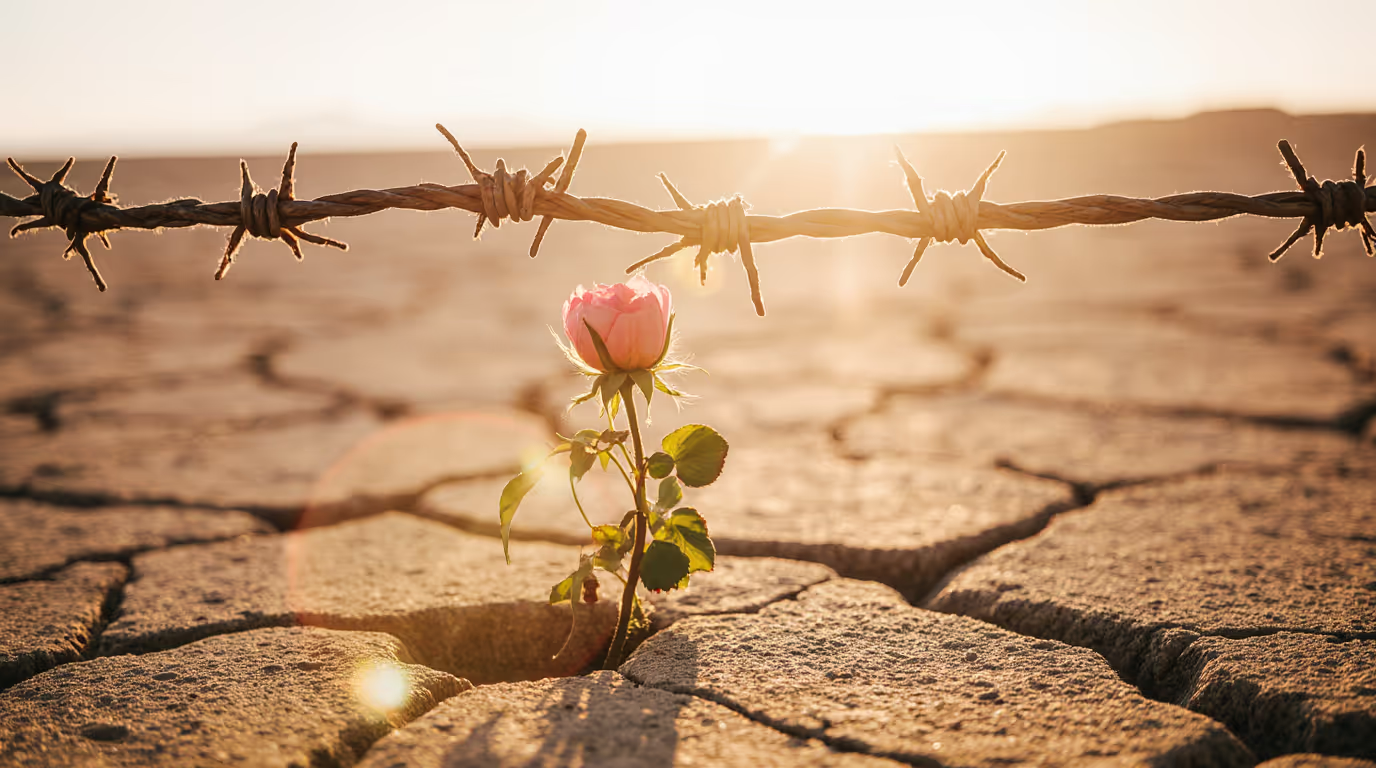
Our Anonymity Protocol
Their Freedom never publishes a testimony without the explicit and informed consent of the survivor. The safety of our sources is non-negotiable. We use pseudonyms, AI-driven voice modulation and digital blurring to protect identities. We conduct risk assessments with every individual to ensure they understand the potential consequences of speaking out. All data is stored on encrypted, air-gapped servers to prevent state surveillance or security breaches.
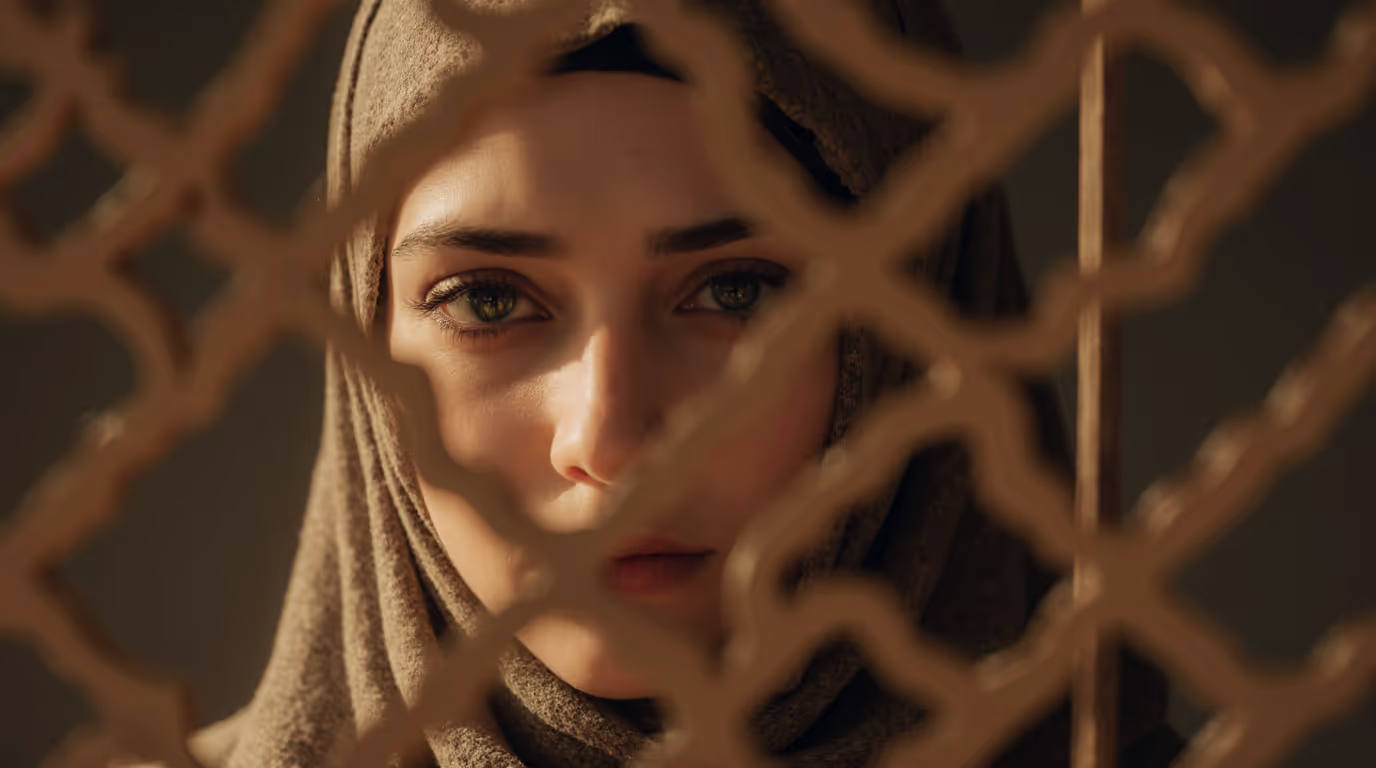
The Eight-Month Wait
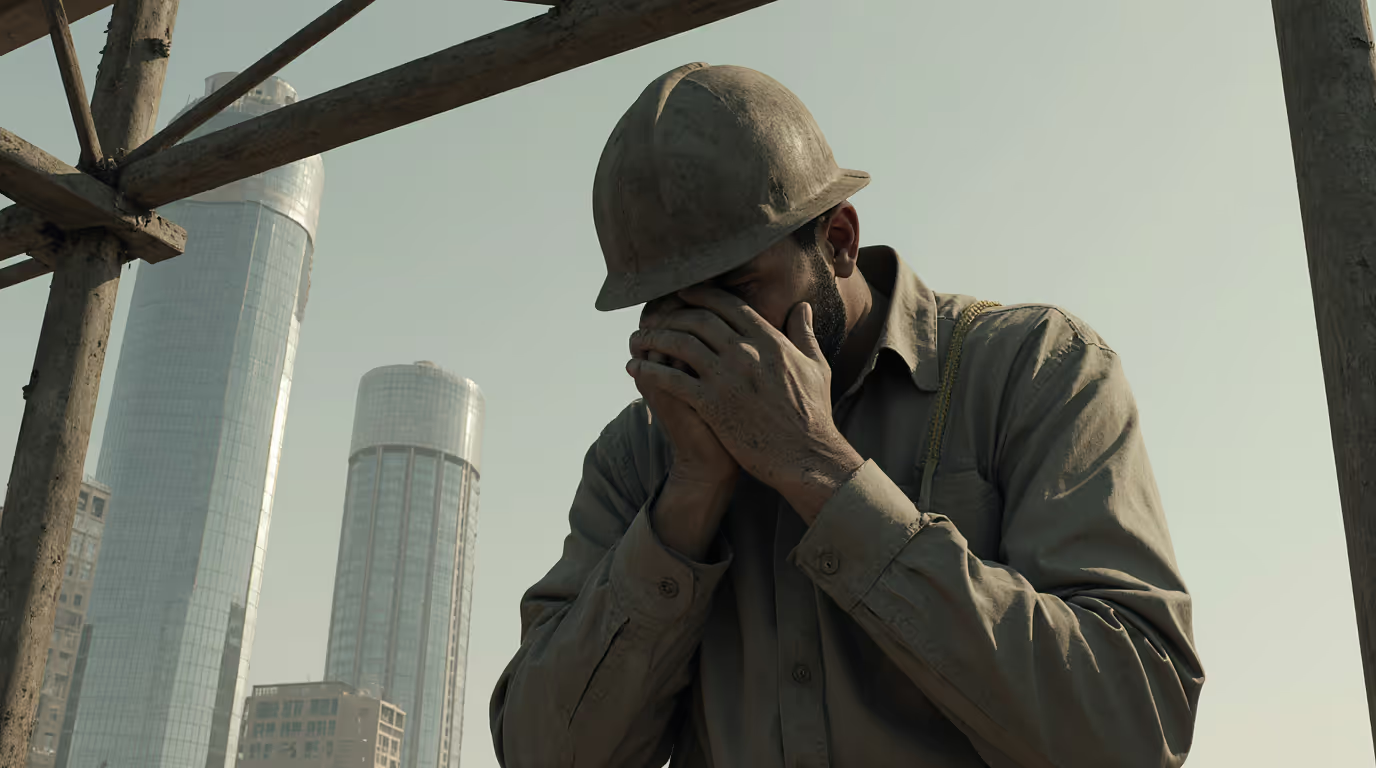
I came here because they told me I could send money home. My family needed it. My mother is sick, my younger brother needs school fees. The agent said I would work on a big construction site and get paid every month. Eight hundred dollars, he said. I signed everything they gave me. I didn't read all of it because it was in English and Arabic, but they said it was normal. When I got to the airport, they took my passport. They said it was just paperwork, that I would get it back. I never did.
For eight months, I didn't see a single dollar. Every week I asked the supervisor when we would get paid, and he just said, "next week, next week." I slept in a metal container with twenty other men. The toilets didn't work half the time. It was so hot we couldn't breathe at night. One of the guys fainted on the site and they just left him in the sun until he could stand again. When I finally told the boss I couldn't work anymore without my wages, he called me ungrateful. He said if I left the site, I would be arrested for "running away." I didn't even know that was a crime. I thought running away was what children do, not something grown men get thrown in jail for.
I am still here. I don't know how to go home because I have no papers and no money for a ticket. My mother stopped answering my calls because she thinks I forgot about her. I didn't forget. I just have nothing to send. I don't know who to ask for help because everyone here says the same thing, “be quiet, work, don't complain.” But I am writing this because I want someone to know that I existed here. That I worked and got nothing. That they took everything from me and called it legal.
My Children's Names
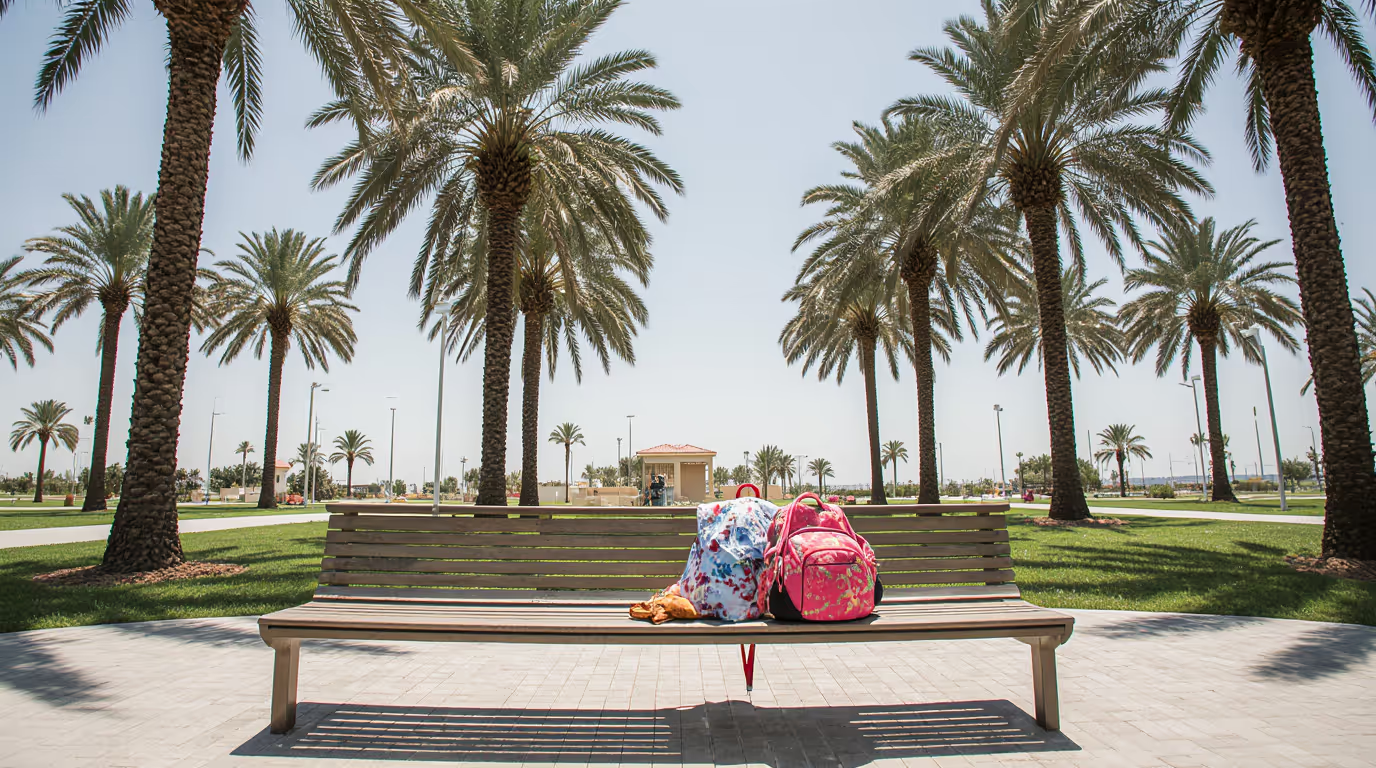
They took everything from my husband because he asked for change. Not violence. Not destruction. Just change. In 2011, he stood in the street with a sign calling for reform and two years later they revoked his citizenship. He became stateless at 34 years old. A man who was born here, worked here and paid taxes here. And because the law in this country does not allow mothers to pass citizenship to their children, the moment he became stateless, our sons became invisible too. Ahmed is seven and Khalil is four. They have no papers, no country, no future.
Last year I tried to register Ahmed for school. The woman at the Ministry looked at me like I was insane when I couldn't produce a passport. "How can a child have no country?" she asked. I didn't know how to answer her and I still don't. My son was born in the same hospital where I was born, and he speaks the same language as me. But because his father was punished, he doesn't exist. He can't go to school. He can't see a doctor without me begging for charity or borrowing money I can't pay back. When he got sick last month with a fever that wouldn't break, I had to wait three days to take him to a clinic because I didn't have the fees. Three days of watching my child burn up in my arms because we are nobody.
Khalil doesn't understand yet. He asks me why his cousin has a passport with a picture and he doesn't. Why his cousin can go to the beach for a holiday and we can't. I tell him it's just paperwork, that we're fixing it. But I'm lying to him. I don't know how to fix it. My husband sits in our house every day, silent, staring at nothing. I catch him crying sometimes when he thinks I'm not looking. He feels like he destroyed us. But he didn't. They did. They punished him for asking for dignity and they punished my children for being born.
I am writing this because I need someone to know that my sons have names. Ahmed and Khalil. They laugh and they fight over toys. They deserve to be seen by the country they were born in. I don't know how much longer I can tell them “It will be okay" when I don't believe it myself. I don't know what I'm supposed to do when the place you call home tells you that you were never meant to belong.
The Price of a Tweet
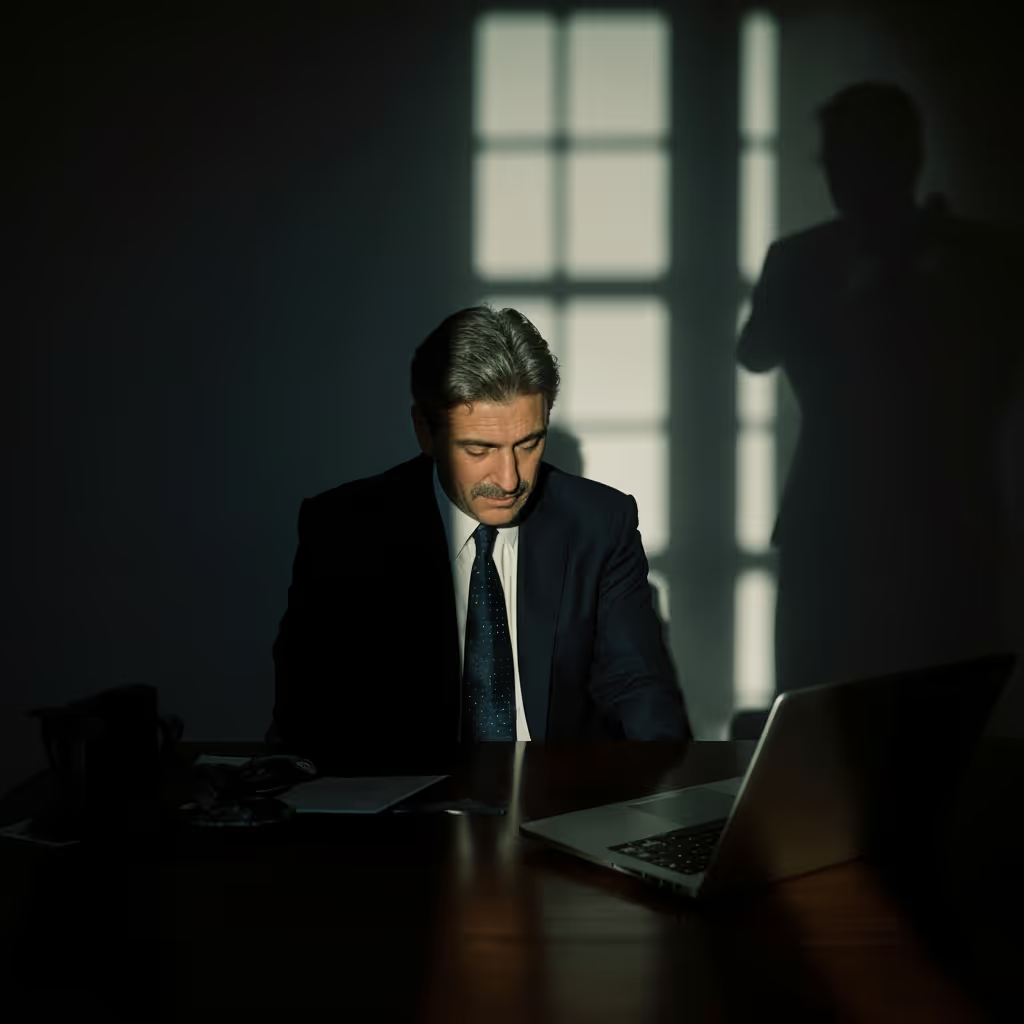
I am a university lecturer. I have taught economics for eleven years. I have published papers in peer-reviewed journals, trained civil servants and contributed to policy discussions on fiscal reform. I have never been affiliated with a political party, and I do not consider myself an activist. I write this now because I need to document what happened to me when I exercised what I believed to be a basic right: the ability to publicly critique government policy.
In March of last year, I posted a thread on social media analysing the structural causes of inflation in our country. I cited official statistics from the Central Bank. I referenced international economic models. I did not insult anyone. I did not call for violence or regime change. I simply argued that certain fiscal policies were contributing to the cost-of-living crisis and that alternative approaches should be considered. Within 48 hours, I was arrested under the cybercrime law. The charge was "undermining the national economy through the spread of false information."
I was held in pre-trial detention for eleven months. During that time, I was interrogated repeatedly, sometimes for six or seven hours at a stretch. They did not ask me about the substance of my economic analysis. They asked me for the passwords to my encrypted messaging applications. They wanted the names of colleagues I had discussed my research with. They wanted to know if I had received foreign funding for my work. I had not. When I refused to unlock my phone, they informed me that refusal to cooperate with an investigation is itself a crime. I was never formally charged with that crime, but the interrogations continued.
I was eventually released on bail, but my passport was confiscated. I am not permitted to leave the country. My employment contract was terminated by the university, not officially because of the arrest, but because I "failed to maintain professional conduct standards." I have not been able to find work since. I am under a travel ban, I am unemployed and I have a permanent record that will follow me for the rest of my life. All because I posted economic data on the internet. I am writing this testimony in the hope that someone outside this country will understand what it means to live in a place where facts are treated as treason.
A House Without a Key
The first thing she took was my phone. The second was the key to the front door. For two years, the boundaries of my world were the four walls of that villa. I knew exactly how many steps it took to walk from the kitchen to the laundry room: seventeen. I walked that path a hundred times a day. My employer told me that she was keeping me safe, that the city outside was dangerous for a woman alone. But the danger wasn't outside. It was in the way she looked at me when I asked for a day off. It was in the way she locked the refrigerator at night so I couldn't eat without asking.
I became a ghost in that house. I cleaned rooms for people who looked right through me. I cooked meals I wasn't allowed to taste. When my father died back home, I didn't know for three weeks because I wasn't allowed to call my family. My sister finally managed to reach the house line, and my employer handed me the receiver with a sigh, as if my grief was an inconvenience to her schedule. I cried in the bathroom for ten minutes and then I went back to ironing her husband's shirts. There was no time to be a daughter. There was only time to be a servant.
I used to dream about the front door. In my sleep, I would turn the handle, and it would open, and I would just walk out into the street. I didn't dream of going anywhere specific, just standing on the pavement, feeling the sun on my face without permission. When I finally did leave, when the police came because a neighbour reported the screaming, I walked out that door and I didn't look back. I left my clothes. I left the money they owed me. I just wanted to be a person again. I am still tired. My hands still shake when I hear a door lock. But I am the one holding the key now.