Sportswashing
The Stadium as a Weapon
How billion-dollar spectacles are used to launder reputations and distract from systemic abuse.
The System Explained
"Sportswashing" is a calculated geopolitical strategy. By purchasing premier league football clubs, hosting Formula 1 races and dominating global golf tours, Gulf states are effectively buying immunity from international criticism. These investments serve a dual purpose. They project an image of modernization to the West while normalizing the regimes that enforce repression at home.
Their Freedom is studying the mechanics of this distraction:
The Soft Power Shield
When a state owns a beloved European football team, fans become de facto defenders of that state's policies, insulating the regime from diplomatic pressure.
The Construction Trap
Mega-events like the World Cup or the Asian Games require massive infrastructure projects that are often built on the backs of forced labour, turning stadiums into crime scenes.
The "Open" Facade
Hosting international athletes allows regimes to claim they are "opening up," even as they imprison domestic activists who call for the very freedoms these events purport to celebrate.
Building the Case
Building the Case: Piercing the Veil
We refuse to let the spectacle silence the truth:
(01)
Financial Mapping
Tracking flows between Gulf sovereign funds and global sports entities to expose the architecture of influence and control.
(02)
Contract Analysis
Examining sponsorship agreements and ownership structures to reveal how sports investments function as diplomatic leverage and reputational management.
(03)
Infrastructure Monitoring
Documenting labor abuses, forced evictions and human rights violations directly linked to mega- events and sports projects across the region.
Regional Reports: The State of the Game
Qatar (The GDP Engine)
Following the 2022 World Cup, sports tourism has become a critical economic pillar. In 2025, officials announced that sports events are now a primary driver of the tourism sector, which aims to contribute 12% to the national GDP by 2030, profit built on a legacy of migrant labour abuse.
Oman (The Next Frontier)
Oman is actively pivoting towards sports tourism as part of Vision 2040. The Ministry of Heritage and Tourism has outlined a strategy to attract $51 billion in investment by 2040, with "adventure sports" and luxury leisure zones serving as the new face of a state that continues to ban all forms of political assembly.
Sportswashing Monitor
What Sportswashing Is and Why It Works
Understanding the global machinery that uses sport to silence dissent.
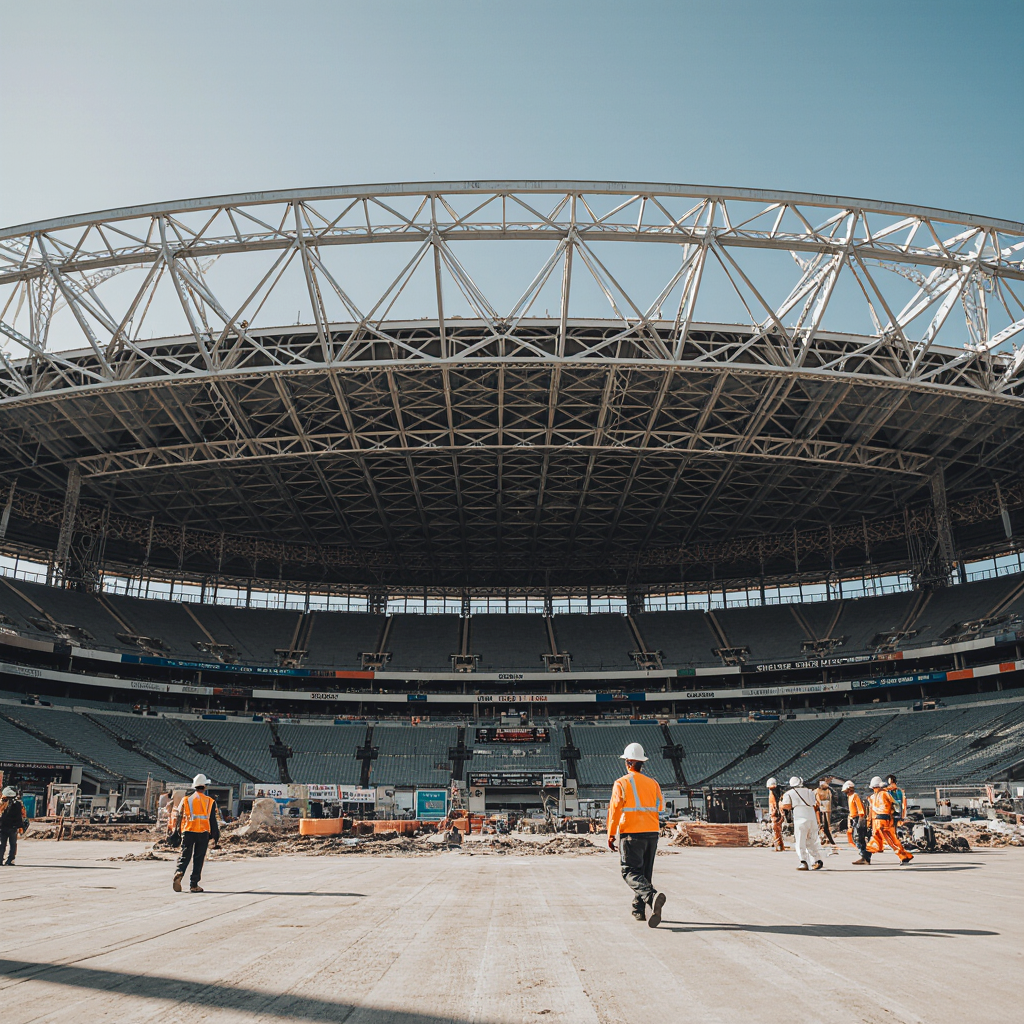
Sportswashing deliberately uses sport as a geopolitical instrument in which both parties’ profit from reputation laundering.
When a Gulf state purchases a European football club or hosts a Formula 1 race, it is embedding itself in the economic and social fabric of Western democracies, making criticism diplomatically expensive. The result is a form of structural impunity: fans become unwitting advocates, sponsors normalize abuse and athletes are silenced by contract clauses that prohibit "political statements."
The brilliance of the strategy lies in its inversion of risk. Traditionally, association with a repressive regime damages a brand. But by owning the brand itself – the club, the event, the league – the regime transforms the relationship. Now, criticism of the state becomes criticism of the sport, and fans instinctively defend "their" team, even when it is a vehicle for authoritarian capital. This is not distraction; it is conversion.
Their Freedom is studying sportswashing because it represents the precise moment when economic power becomes immune to moral scrutiny. When stadiums are built by forced labour and activists are imprisoned to ensure a "clean" event, sport ceases to be entertainment. It becomes evidence.
Case Studies: The Link Between Sports and Abuse
Building the Case: Piercing the Veil
We refuse to let the spectacle silence the truth:
Formula 1 Bahrain Grand Prix
Bahrain
Racing Through Repression
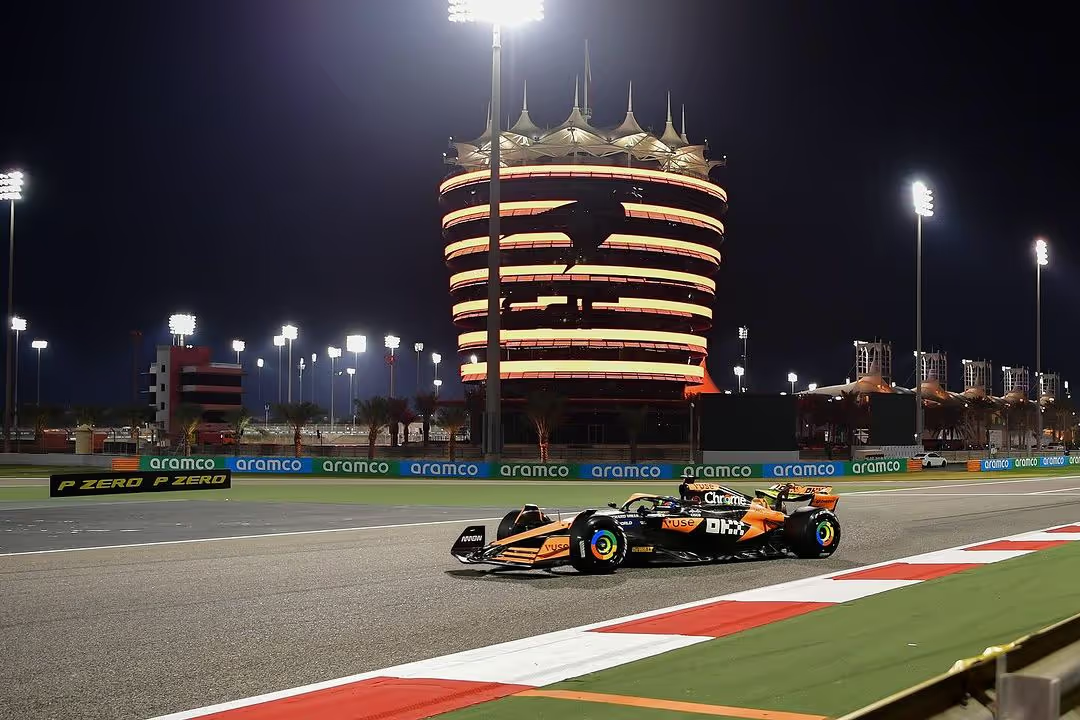
In 2004, Bahrain became the first Middle Eastern country to host a Formula 1 Grand Prix. The event was explicitly designed as a "rebranding" tool. Former F1 CEO Bernie Ecclestone later admitted, "This is what you wanted to do, to use the brand to promote the country…It suited us and it suited them."
Gamers8 Festival & Esports World Cup (Riyadh)
Saudi Arabia
The E-Sports Monopoly: Sanitizing the Digital Frontier
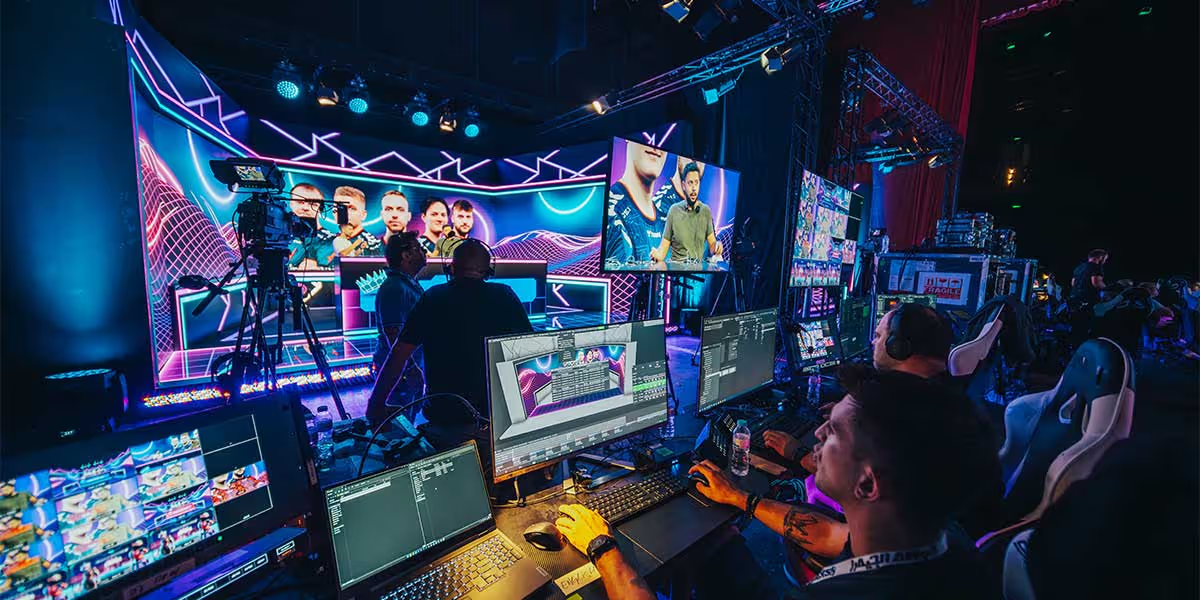
In 2022, Saudi Arabia launched a strategic takeover of the global e-sports industry, investing over $38 billion through its Public Investment Fund (PIF) to purchase stakes in major gaming publishers (including SNK, Capcom and Nintendo) and to host the world's richest gaming tournaments. The centrepiece of this strategy is the Esports World Cup, which offered a $60 million prize pool in 2024, the largest in gaming history
Manchester City FC Ownership & Sponsorship Deals
United Arab Emirates
The Financial Fair Play Bypass
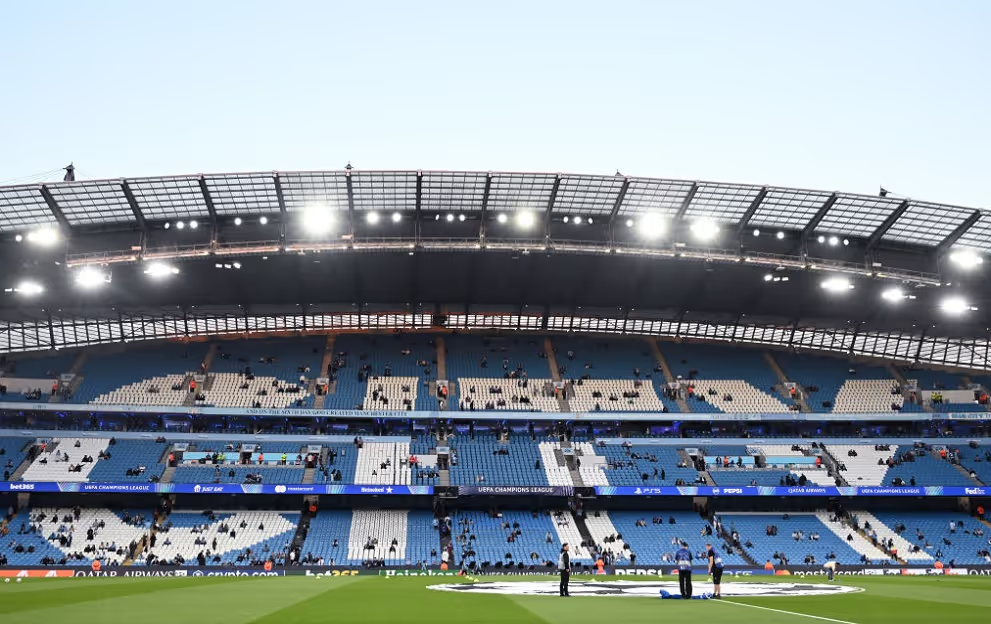
In 2008, the Abu Dhabi United Group, a private equity firm controlled by Sheikh Mansour bin Zayed Al Nahyan, a senior UAE royal, purchased Manchester City FC. The acquisition was a landmark sportswashing event, designed to embed the UAE into the social and economic fabric of the UK and project a "friendly" image of the regime.
What We Demand
(01)
From International Sporting Bodies
Human rights clauses must be enforceable, not symbolic. Hosting agreements should mandate independent labour monitoring, guarantee freedom of assembly for activists during events and include financial penalties for violations.
(02)
From Corporate Sponsors
Complicity is not passive. Brands that profit from sportswashed events must leverage their sponsorship power to demand accountability, or they become co-architects of the abuse.
(03)
From Fans and Athletes
Silence is a choice. Those who benefit from the spectacle must demand that the institutions they love do not become vehicles for oppression.